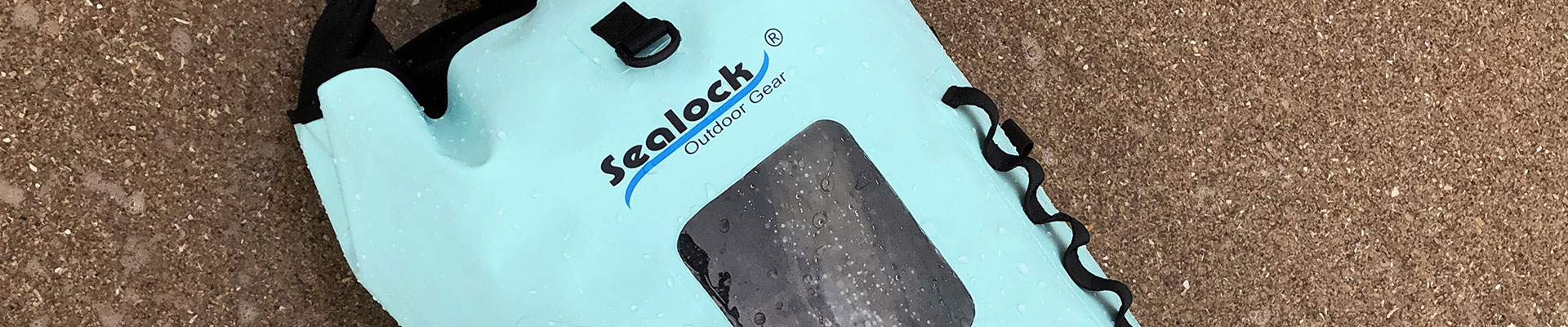
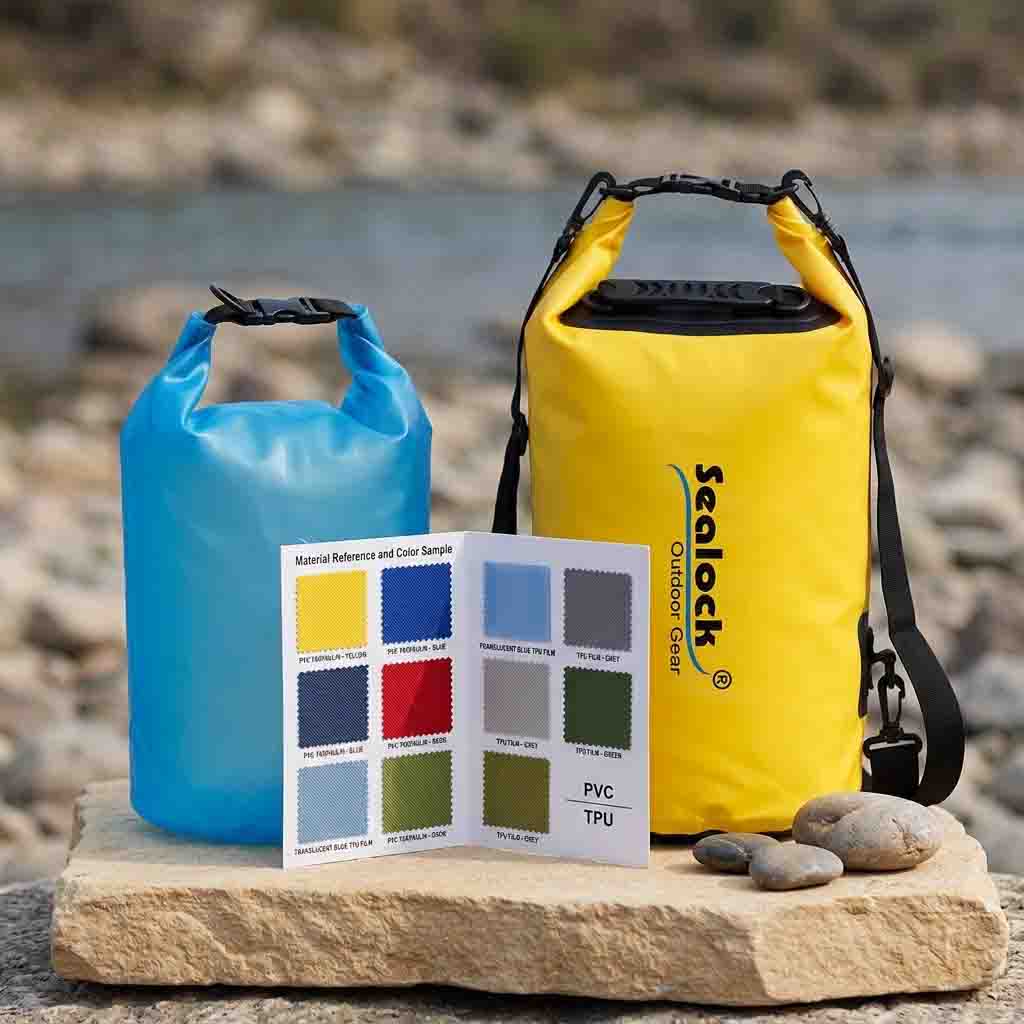
Sealock is a dry bag manufacturer and OEM supplier building in both TPU and PVC. The useful question in this comparison is not which material is better in the abstract — it's which performs better under the conditions a dry bag actually faces: rolled and unrolled several times a day, dragged across rock, left in a hot boat, packed away creased for a season, and expected to seal on the first attempt with cold hands. That framing gives clearer answers than a generic spec sheet, and it changes which material wins depending on the product.
The Comparison at a Glance
Property
PVC tarpaulin
TPU-coated / laminated
Body
Rigid; stands up on its own
Soft, rubber-like; packs down
Weight
Heavier — thicker coating
Lighter for equivalent strength
Flex fatigue (rolling)
Hardens over time; cracks along fold lines
Thousands of fold cycles without cracking
Cold
Stiffens; can crack below about −10°C
Flexible to around −20°C, some grades far lower
Abrasion & scraping
Excellent — thick coating takes constant scraping
Very good; matches most needs at heavy denier
Tear resistance
Good
Higher, especially on nylon base
UV & colour
Fades sooner without a stabilised grade
Better UV resistance, less fading
Odour
Can smell on unboxing
Low odour
Environmental profile
Harder to recycle; under increasing scrutiny
Recyclable; PVC-free and phthalate-free story
Cost
The value baseline
Higher — film and lamination cost more
Same welded standard, different behaviour — the use case decides which one is right.
Flex Fatigue: The Property That Matters Most on a Dry Bag
This is the difference that separates a dry bag from any other waterproof product. A user rolls the top three to five times every single time they seal the bag. Over a season that's thousands of fold cycles concentrated on the same few centimetres of material.
PVC's rigidity is an asset for structure and a liability here. With repeated folding and UV exposure it gradually hardens, loses flexibility, and becomes prone to cracking specifically along the fold lines — the exact place where a dry bag has to stay watertight. TPU behaves like elastic rubber instead of rigid plastic: field testing shows TPU laminated fabrics withstanding thousands of folding cycles without cracking, because the material absorbs the deformation and returns.
The practical implication for a brand is about product lifetime, not day-one performance. Both materials seal perfectly when new. The question is what the bag looks like after two seasons of daily rolling — and that's where warranty claims and repeat-purchase decisions get made.
Cold: A Specification Issue, Not a Detail
Temperature behaviour follows the same logic. PVC stiffens as it gets colder and becomes brittle enough to crack below roughly −10°C, while TPU stays flexible to around −20°C and some grades far lower. For a ski, alpine, winter-paddling or shoulder-season product, that's decisive — not because the bag stops being waterproof at low temperature, but because a stiff bag can't be rolled and sealed properly, and forcing a cold, rigid fold is what starts a crack.
There's a usability angle too: testers consistently report TPU dry bags are easier to seal one-handed, which matters when a paddler is sealing a bag while afloat or standing in shallow water.
Where PVC Genuinely Wins
None of the above makes PVC the wrong choice — it's still the material behind most of the dry bags sold, for good reasons:
Abrasion and scraping — a thick PVC coating takes constant contact with rock, gravel, and boat decks better than almost anything. For whitewater, rafting, and cargo hauling, that's the priority.
Structure — a rigid body holds its shape, stands up when loaded, and packs squarely into a hatch or a rack.
Heavy loads — large-capacity bags for rafting and cargo transport rely on PVC precisely because they need strength and abrasion resistance more than flexibility.
Cost — lower raw material cost and simpler processing, which is what makes high-volume and promotional programmes viable.
Weldability — it welds cleanly and predictably, which supports consistency across a large run.
One caveat worth stating plainly: PVC's weaknesses are largely about formulation control. Odour, tackiness, and premature stiffening come from uncontrolled plasticizers, not from the base polymer. Specified properly — and, for EU, UK or California markets, verified phthalate-free and REACH-compliant — PVC performs reliably for years.
Three to five folds, every time it's sealed — thousands of cycles on the same crease.
Read Past the Coating: The Base Fabric Matters Too
A dry bag fabric is a composite — a coating bonded to a woven base — and buyers often specify only the coating. The base determines strength, weight, and abrasion resistance:
Nylon base — higher tear strength and abrasion resistance than polyester, which is why premium outdoor brands favour TPU-laminated nylon.
Polyester base — lower cost, good dimensional stability, widely used with PVC.
Denier — sets strength and weight, not waterproofing. A 70D nylon-coated PVC gives an ultralight bag; 500D tarpaulin gives a workhorse.
Lamination vs coating — TPU film is heat-laminated to the fabric, bonding the layers without adhesives that could degrade over time.
Specify base fabric, denier, coating type, and seam method as four separate lines in the brief. The wider material principles are covered in our waterproof sling bag material comparison guide.
Matching Material to the Product
If the dry bag is for…
Specify
Whitewater, rafting, rock contact
500D PVC tarpaulin — abrasion first
Large-capacity cargo hauling
PVC — strength and structure under heavy loads
Daily-use, frequently rolled bags
TPU — flex fatigue is the limiting factor
Cold-climate, ski, winter paddling
TPU — PVC cracks below about −10°C
Ultralight backpacking
TPU, or 70D nylon-coated PVC for the lightest builds
Premium lines with an eco story
TPU, recycled (GRS) where documentation is needed
High-volume, promotional, value lines
PVC — controlled, verified formulation
Many ranges carry both, and that's the sensible answer rather than a compromise: PVC for the rugged and value models, TPU for the light, cold-tolerant, and premium ones, all built to the same welded standard.
The Product Basis
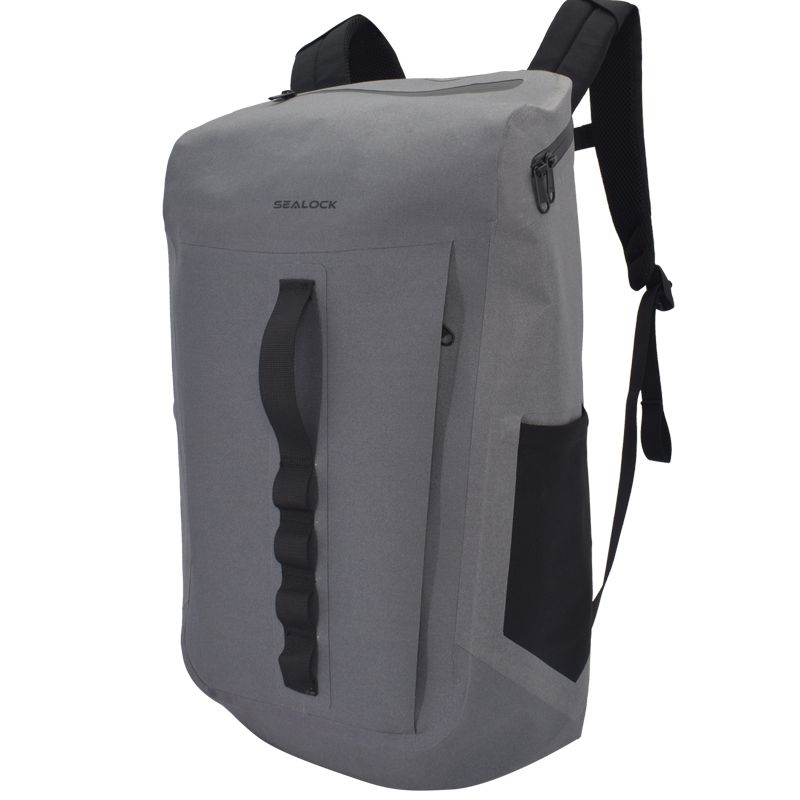
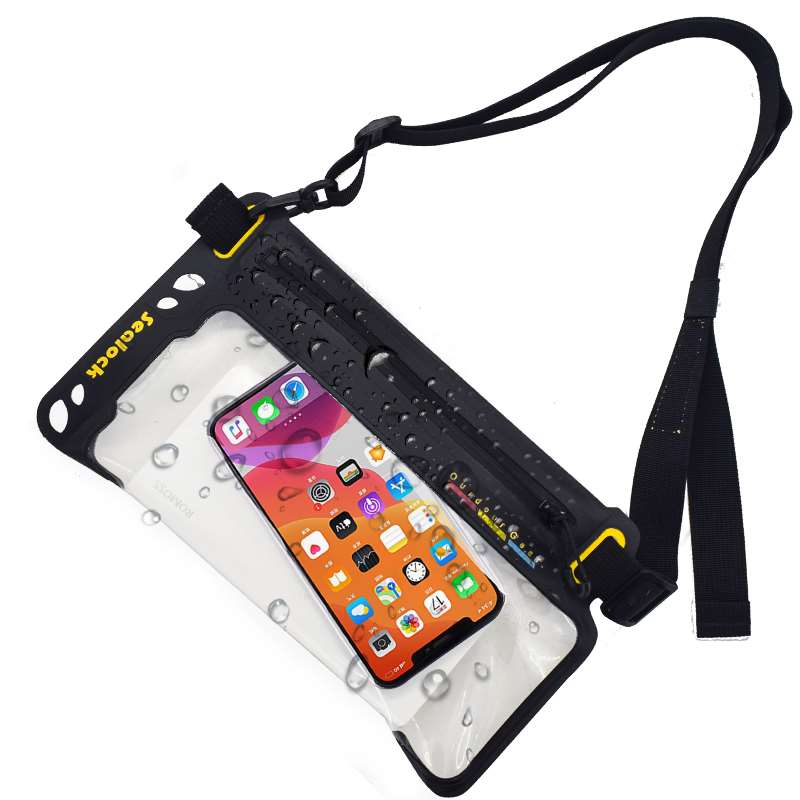
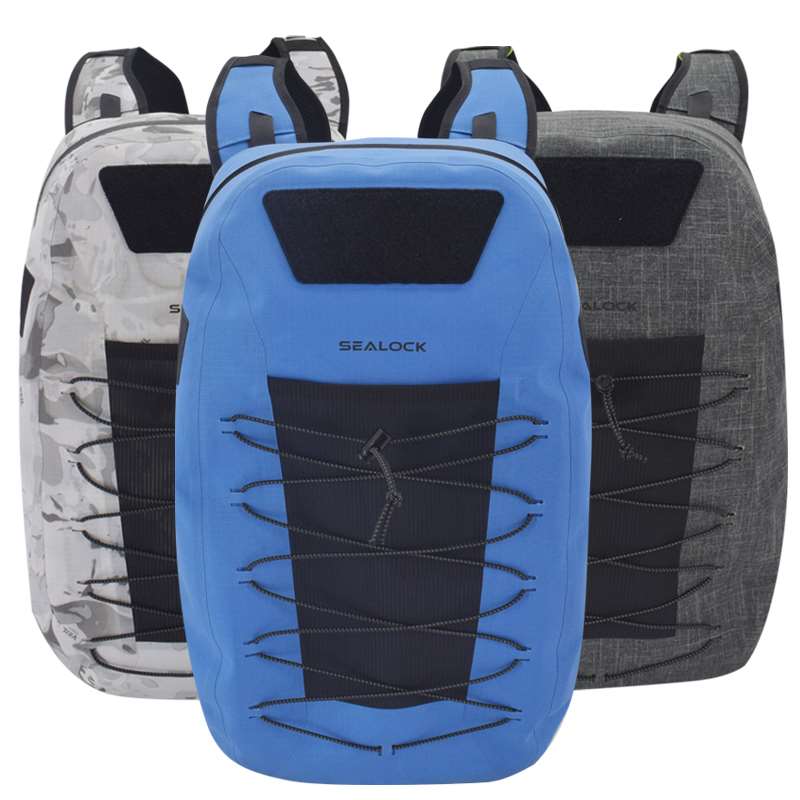
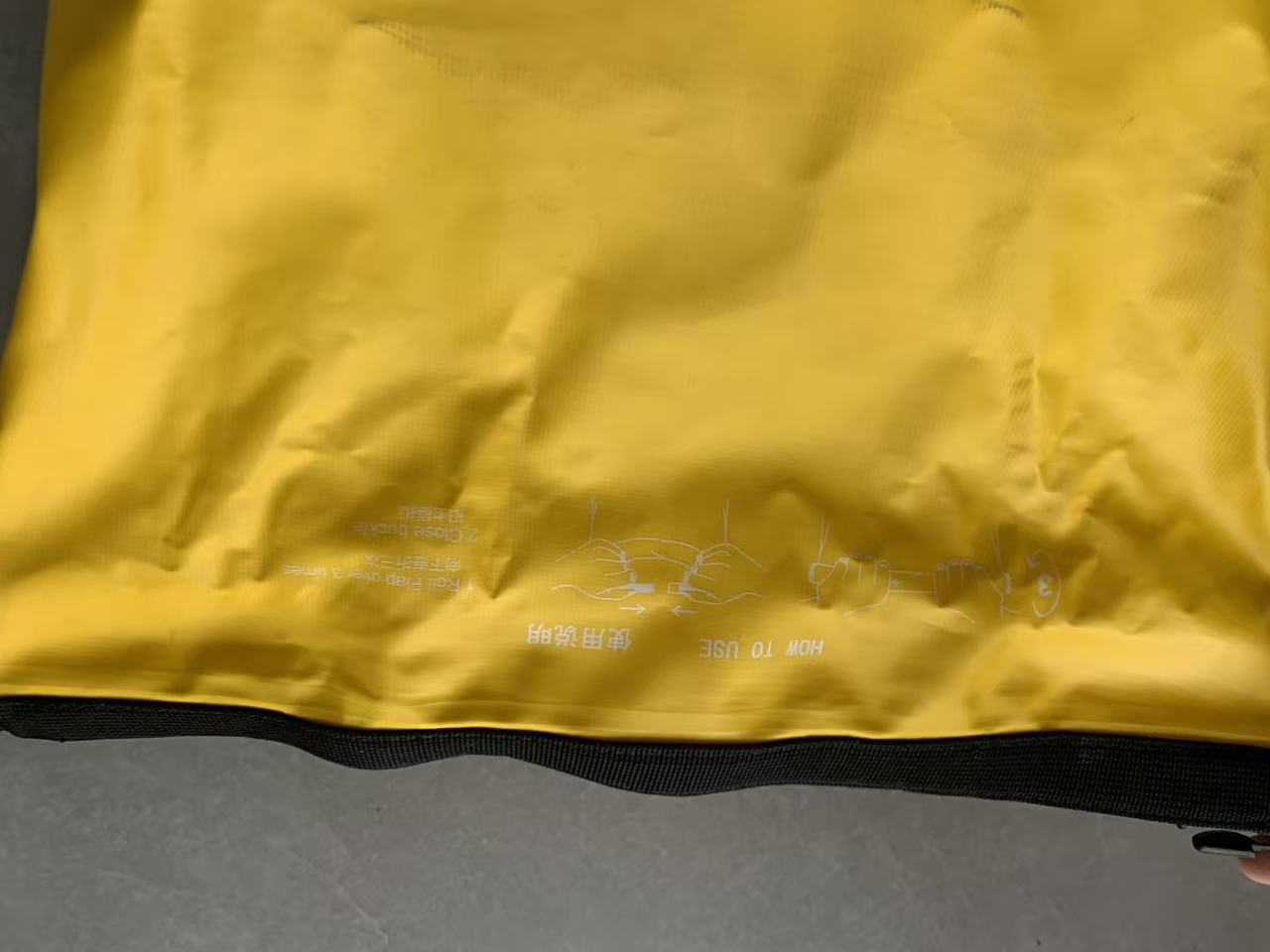
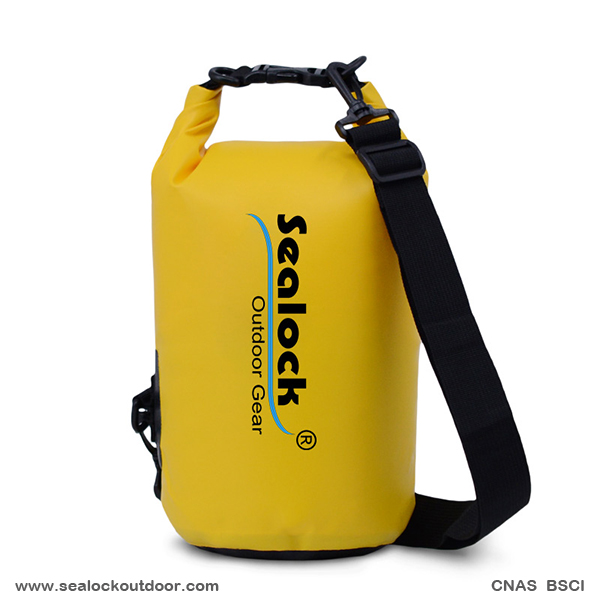
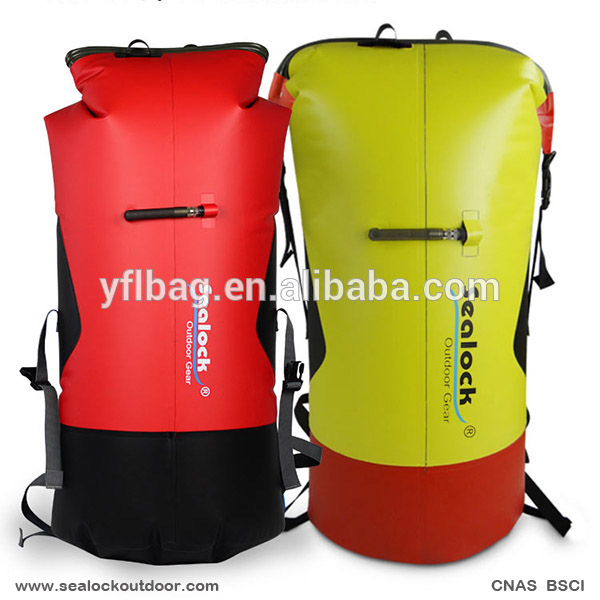
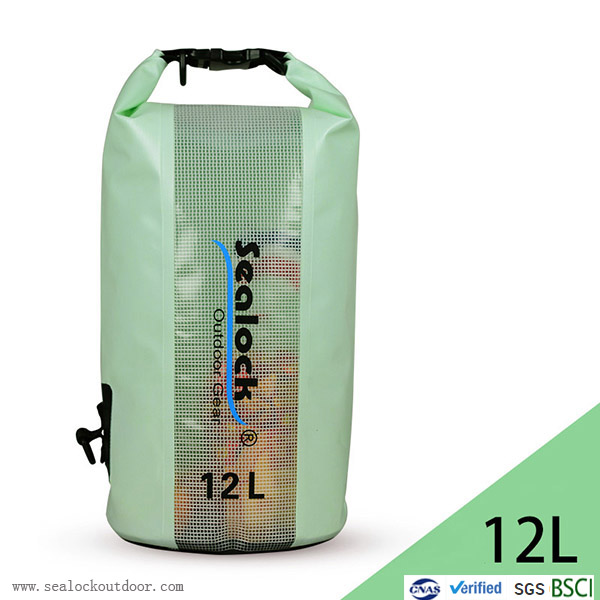
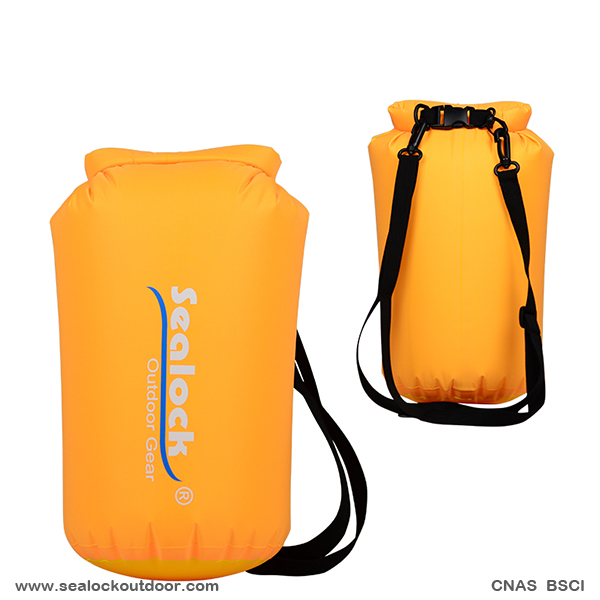
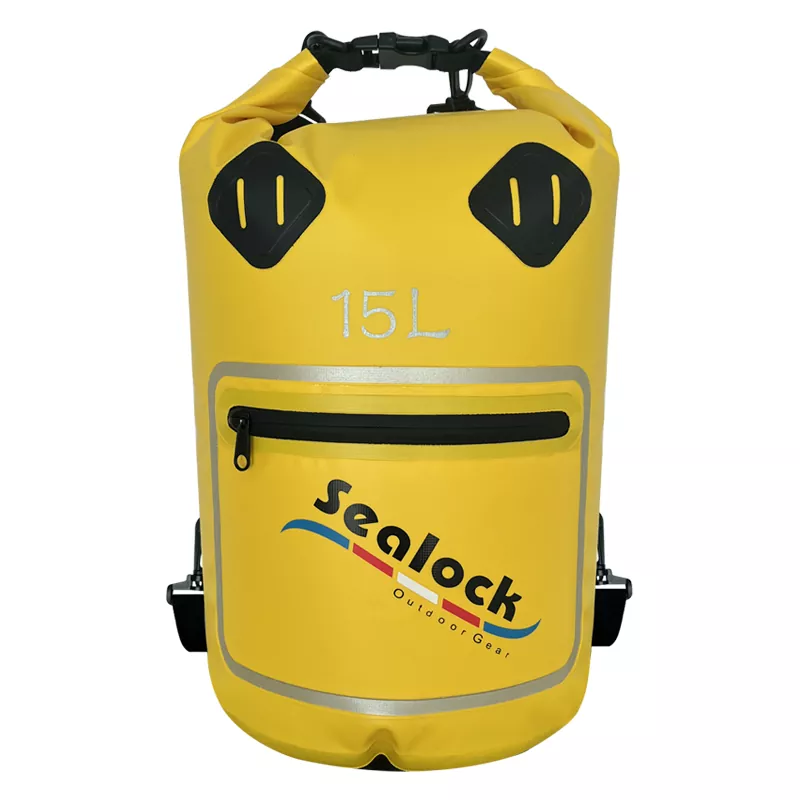
These welded bags, from Sealock's dry bag line, show both materials in production and serve as equal starting points for an OEM order — none is ranked above another:
500D PVC mesh — reinforced base for the largest cargo-hauling sizes
200
The SL-D054 makes the point directly: one shape, offered in either PVC or TPU, so a brand can run a value version and a premium version of the same design. Material, denier, colourway and branding are all specifiable per order; the customization options are set out in our custom dry bag production guide.
Quality Control Across Both Materials
PVC and TPU weld to different parameters, so material control is where consistency starts. At IQC, incoming rolls are verified for coating thickness, adhesion, colour difference and fastness against the signed standard. IPQC covers cutting tolerance, weld integrity and stitched load points in line, with peel tests on sample welds at the start of each run — a step that matters more when a factory alternates between materials. OQC covers AQL sampling, batch immersion testing, and gold-sample comparison, with SGS or QIMA available. Sealock also strictly executes the complete customer inspection procedure on finished goods: unboxing, vacuum extraction, a 24-hour static rest, and air-leak determination. The lab suite additionally covers weld bond and peel strength, a 1,500+ cycle load test with jerk-loading on strap anchors, abrasion, tear, tensile, salt spray, UV, colour fastness and colour difference — the flex and UV results being where the PVC-versus-TPU difference is clearest.
FAQ: Dry Bag Materials
Q: Which material lasts longer on a dry bag?
A: TPU, in most real use, because the limiting factor is flex fatigue at the roll-top. PVC hardens with repeated folding and UV and can crack along fold lines; TPU withstands thousands of fold cycles. PVC still leads for pure abrasion against rock.
Q: At what temperature does PVC become a problem?
A: It stiffens as it cools and can crack below roughly −10°C. TPU stays flexible to around −20°C and some grades far below. For winter and alpine products, specify TPU.
Q: Is PVC simply the cheap option?
A: No. It's the right choice where abrasion resistance, rigidity, heavy loading, and cost control matter most — whitewater bags, cargo haulers, and volume lines. Its known weaknesses come from uncontrolled plasticizer formulation, not the base polymer.
Q: Does denier tell me how waterproof a bag is?
A: No. Denier is the base yarn thickness — strength and weight. Waterproofing comes from the coating and the welded seams. Specify base fabric, denier, coating and seam method separately.
Q: Nylon or polyester base?
A: Nylon offers higher tear strength and abrasion resistance, which is why premium outdoor brands prefer TPU-laminated nylon. Polyester costs less and is widely used with PVC.
Q: Which is better for a sustainability claim?
A: TPU — it's recyclable, PVC-free and phthalate-free, and easier to document, which is why premium brands have been reducing PVC in their top lines. Recycled (GRS) options are available where certification is needed.
Talk to the Factory
To choose the right material for your dry bag programme, contact Sealock at info@sealock.com.hk or +86-769-82009361. Over twenty years of high-frequency welding in both PVC and TPU, recycled options, dual China–Vietnam production, and a full customer inspection procedure on every shipment.
نحن نستخدم ملفات تعريف الارتباط لنقدم لك تجربة تصفح أفضل، وتحليل حركة مرور الموقع، وتخصيص المحتوى. باستخدام هذا الموقع، فإنك توافق على استخدامنا لملفات تعريف الارتباط.
سياسة الخصوصية
 English
  Español
  Português
  русский
  Français
  日本語
日本語  Deutsch
  tiếng Việt
  Italiano
  Nederlands
  ภาษาไทย
  Polski
  Svenska
  magyar
  Malay
Malay  বাংলা ভাষার
  Dansk
Dansk  Suomi
Suomi  हिन्दी
  Pilipino
  한국어
한국어  Türkçe
  Gaeilge
  العربية
  Indonesia
  Norsk
Norsk  تمل
تمل  český
český  ελληνικά
  український
  Javanese
  فارسی
فارسی  தமிழ்
தமிழ்  తెలుగు
  नेपाली
  Burmese
  български
  ລາວ
ລາວ  Latine
  Қазақша
  Euskal
  Azərbaycan
  Slovenský jazyk
  Македонски
  Lietuvos
  Eesti Keel
  Română
  Slovenski
  मराठी
मराठी  Srpski језик